Inducement & Liquidity Sweeps
Learn how inducement traps traders and how liquidity sweeps reveal the real market direction.

Inducement & Liquidity Sweeps
- Define the reference level
- Identify the excursion and return
- Do not infer manipulation from candles
- Test entry and exit outcomes
Price may cross a visible level and reverse. A chart cannot establish that the move was designed to trap traders. This behavior creates inducement and liquidity sweeps.
Price sweeps can be described objectively, but candles do not identify trader intentions or guarantee a subsequent reversal.
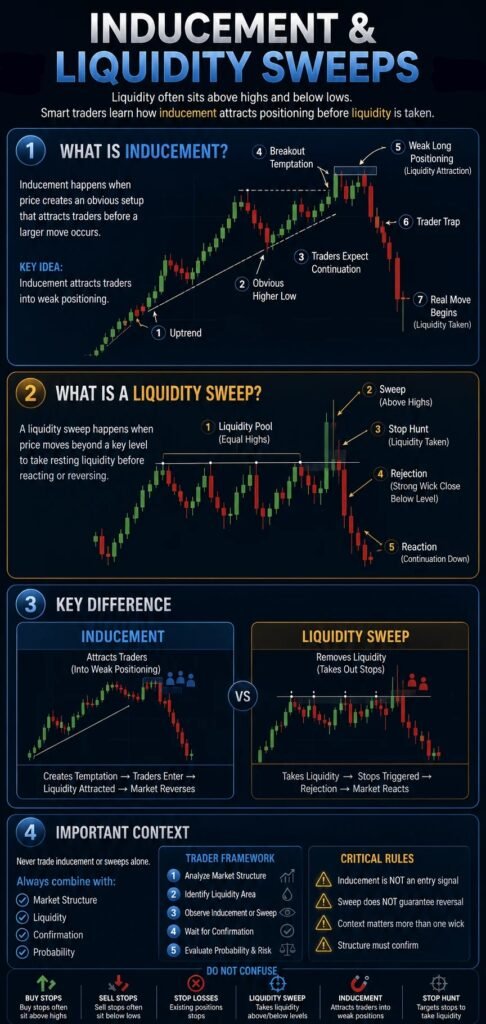
What Is Inducement
Inducement is a discretionary label for a price move that attracts entries before a reversal; intention cannot be inferred from candles.
- Price pushes above highs and attracts breakout buyers
- Price drops below lows and triggers panic selling
- Retail stops gather around obvious levels
- A reversal sometimes follows, but there is no guaranteed subsequent move
Inducement attracts liquidity before the market commits to direction.
What Is A Liquidity Sweep
A liquidity sweep happens when price moves beyond a key level, takes liquidity and quickly rejects.
- Long wick above highs or below lows
- Fast rejection after the liquidity grab
- Often appears at obvious support or resistance
- Frequently happens before reversals or expansions
A sweep describes price moving beyond a reference level and returning. It does not prove which orders executed.
How To Trade Sweeps
- Mark obvious highs and lows where stops likely sit
- Wait for price to sweep liquidity
- Look for rejection, CHoCH or BOS confirmation
- Enter after confirmation instead of chasing the wick
A sweep is one possible setup component; its performance requires testing.
Common Mistakes
- Entering breakouts without confirmation
- Placing stops at obvious highs or lows
- Trading directly into the sweep candle
- Ignoring structure after liquidity is taken
Liquidity matters more than emotion. Follow confirmation, not temptation.
Quick Recap
- Inducement attracts traders into traps
- Sweeps remove liquidity
- CHoCH and BOS describe selected changes in swing structure
- Best entries often come after the sweep
Evidence and Risk Limits
These chart labels describe a chosen analytical framework, not verified institutional orders or guaranteed outcomes. Specify levels, timeframe, invalidation and execution costs before testing a rule. Compare results with independent data, including losing signals, and do not assume that adding confirmations increases expectancy.
End of lesson 4
Remember
- A sweep is an observable price excursion, not proof of deliberate stop hunting.