Inducement & Liquidity Sweeps
Learn how inducement traps traders and how liquidity sweeps reveal the real market direction.

Inducement & Liquidity Sweeps
- Wait for liquidity to be taken
- Avoid breakout chasing
- Watch for rejection after the sweep
- Confirm direction with CHoCH or BOS
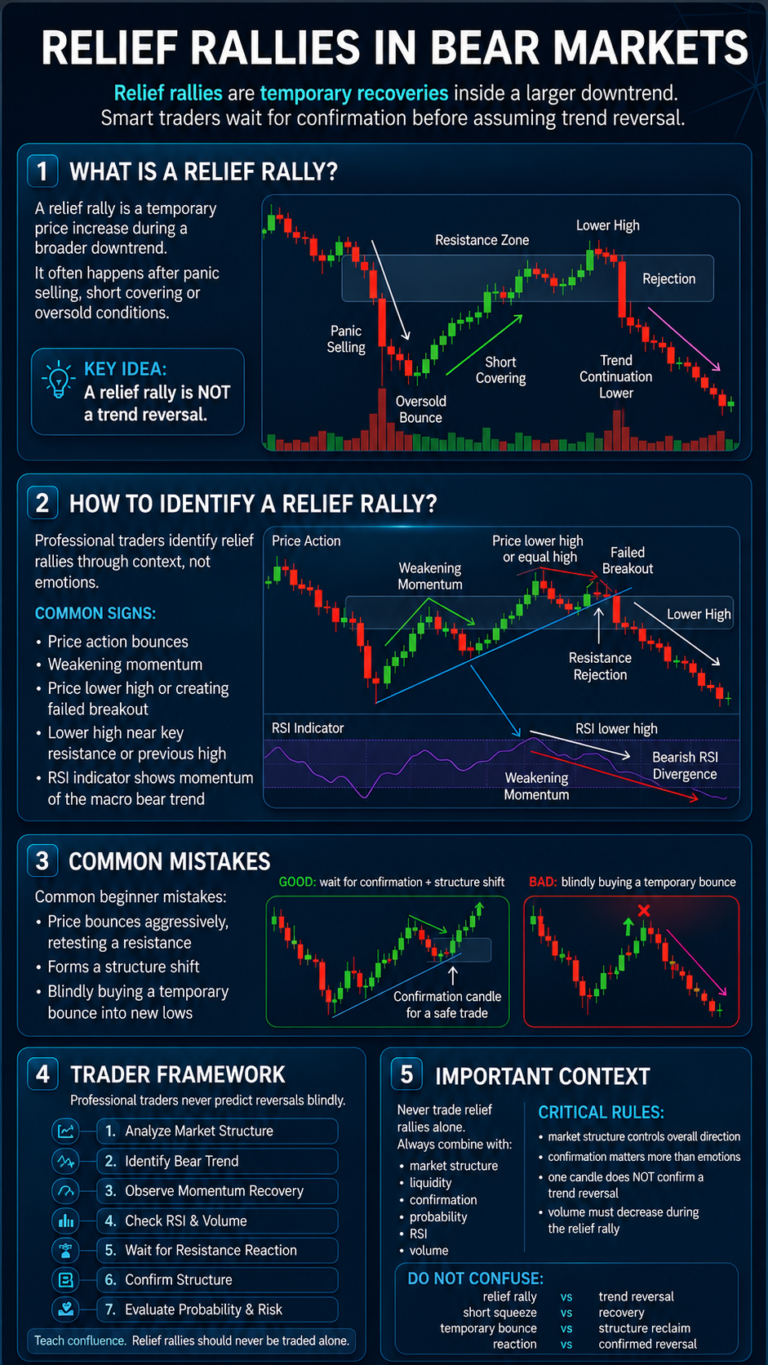
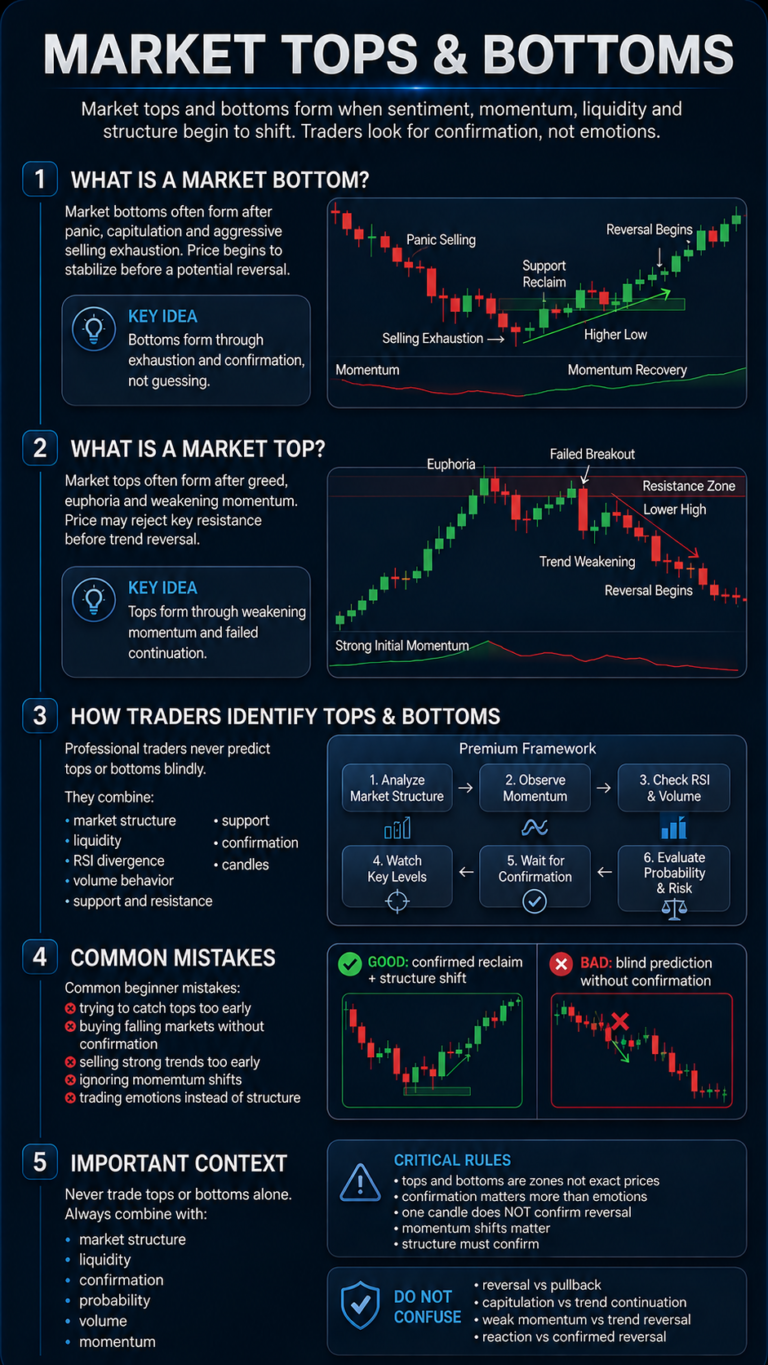
Markets often move against traders before moving in the real direction. This behavior creates inducement and liquidity sweeps.
Understanding liquidity helps traders avoid traps and follow smart money instead of reacting emotionally.
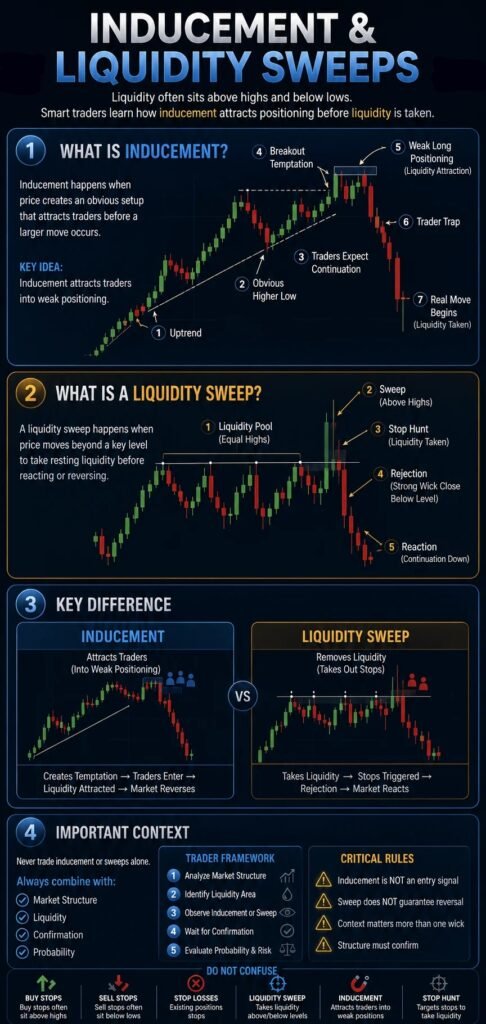
What Is Inducement
Inducement happens when price tempts traders into poor positions before reversing.
- Price pushes above highs and attracts breakout buyers
- Price drops below lows and triggers panic selling
- Retail stops gather around obvious levels
- The real move often starts after traders get trapped
Inducement attracts liquidity before the market commits to direction.
What Is A Liquidity Sweep
A liquidity sweep happens when price moves beyond a key level, takes liquidity and quickly rejects.
- Long wick above highs or below lows
- Fast rejection after the liquidity grab
- Often appears at obvious support or resistance
- Frequently happens before reversals or expansions
Sweeps often remove weak hands before the real move begins.
How To Trade Sweeps
- Mark obvious highs and lows where stops likely sit
- Wait for price to sweep liquidity
- Look for rejection, CHoCH or BOS confirmation
- Enter after confirmation instead of chasing the wick
The best setups usually appear after liquidity gets taken.
Common Mistakes
- Entering breakouts without confirmation
- Placing stops at obvious highs or lows
- Trading directly into the sweep candle
- Ignoring structure after liquidity is taken
Liquidity matters more than emotion. Follow confirmation, not temptation.
Quick Recap
- Inducement attracts traders into traps
- Sweeps remove liquidity
- CHoCH and BOS help confirm direction
- Best entries often come after the sweep
- Smart money hunts liquidity before expansion.