Market Tops & Bottoms
Learn how market tops and bottoms form through emotion, exhaustion and structure shifts.

Market Tops & Bottoms
- Never predict tops or bottoms blindly
- Wait for exhaustion and divergence
- Confirm with CHoCH or BOS
- Use higher timeframe context
Market tops and bottoms form when emotion reaches extremes and market structure begins to shift. Strong traders look for confirmation, not perfect turning points.
What Market Tops And Bottoms Mean
A market top often forms after greed, euphoria and weakening momentum.
A market bottom often forms after fear, panic selling and exhaustion.
Both zones can look obvious after the move. In real time, they require patience and confirmation.
The goal is not to catch the exact high or low. The goal is to recognize when the market is losing strength.
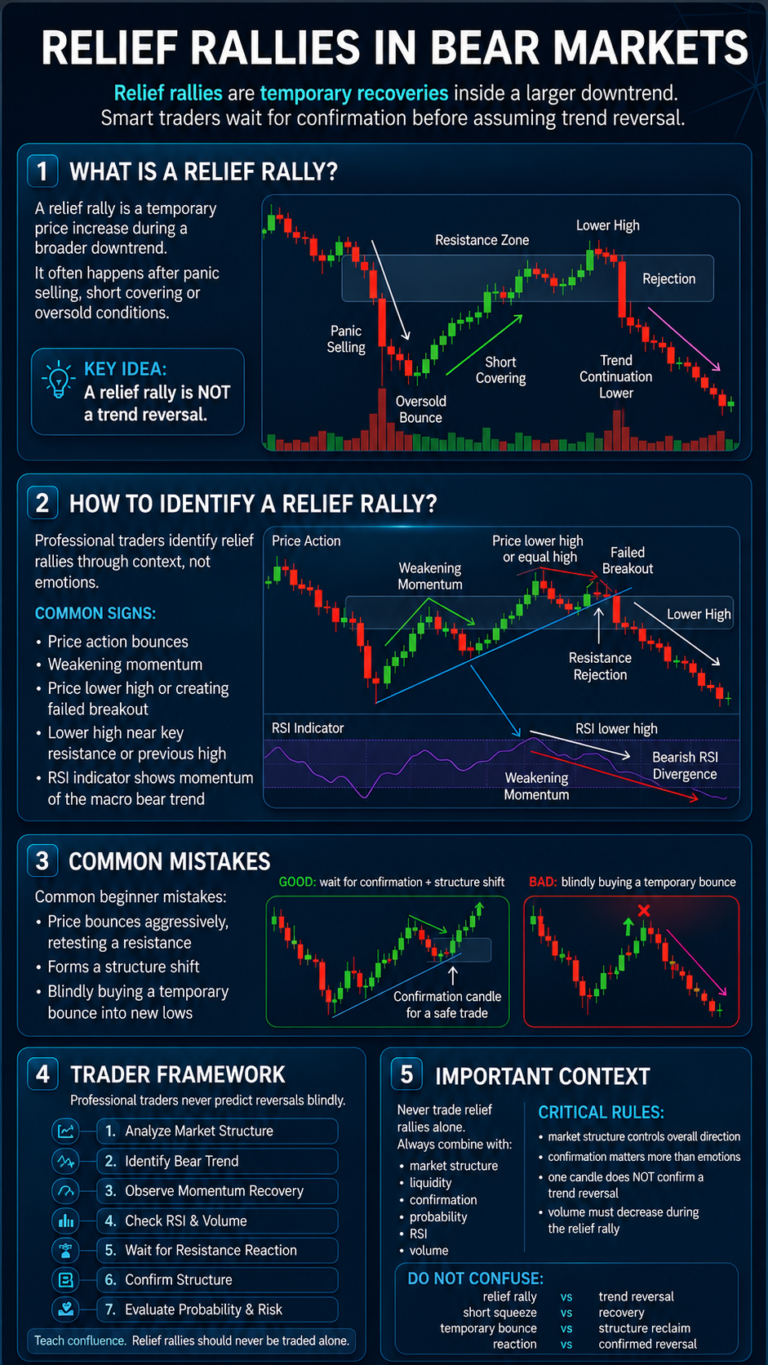
How Market Tops Form
A top can appear when price keeps pushing higher, but buyers become weaker.
- Price sweeps previous highs and rejects
- Momentum weakens near resistance
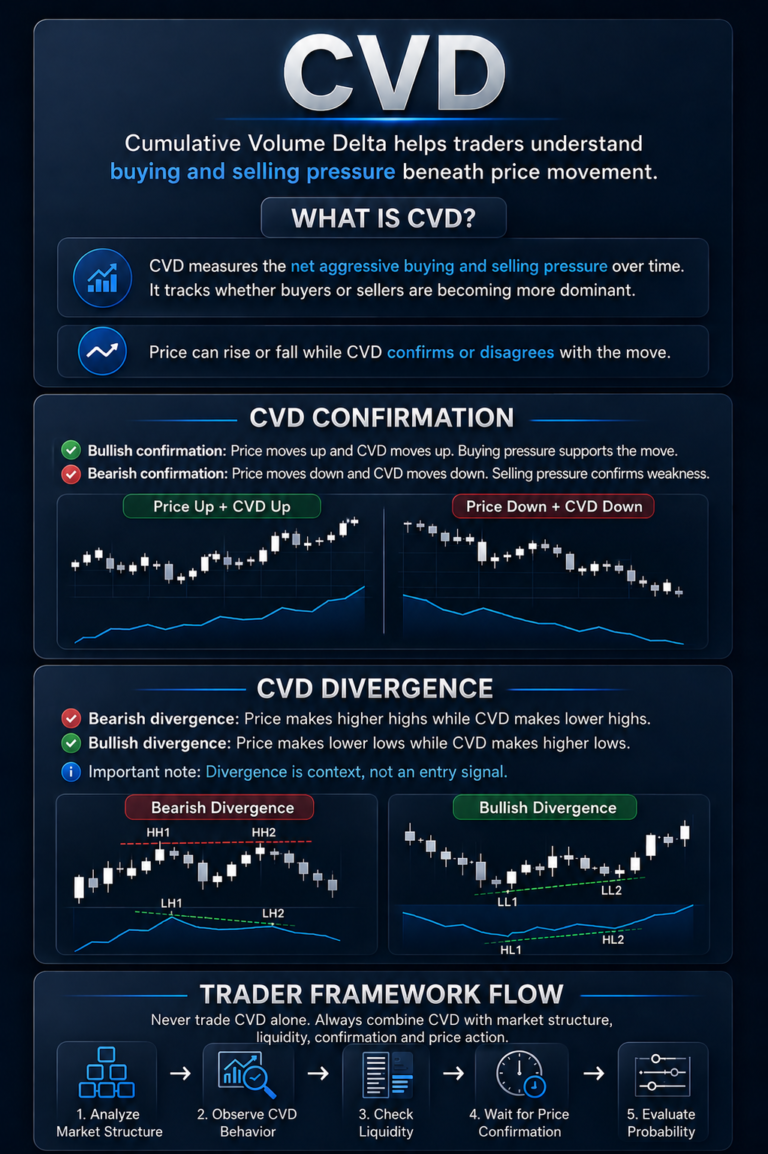
- RSI or CVD divergence appears
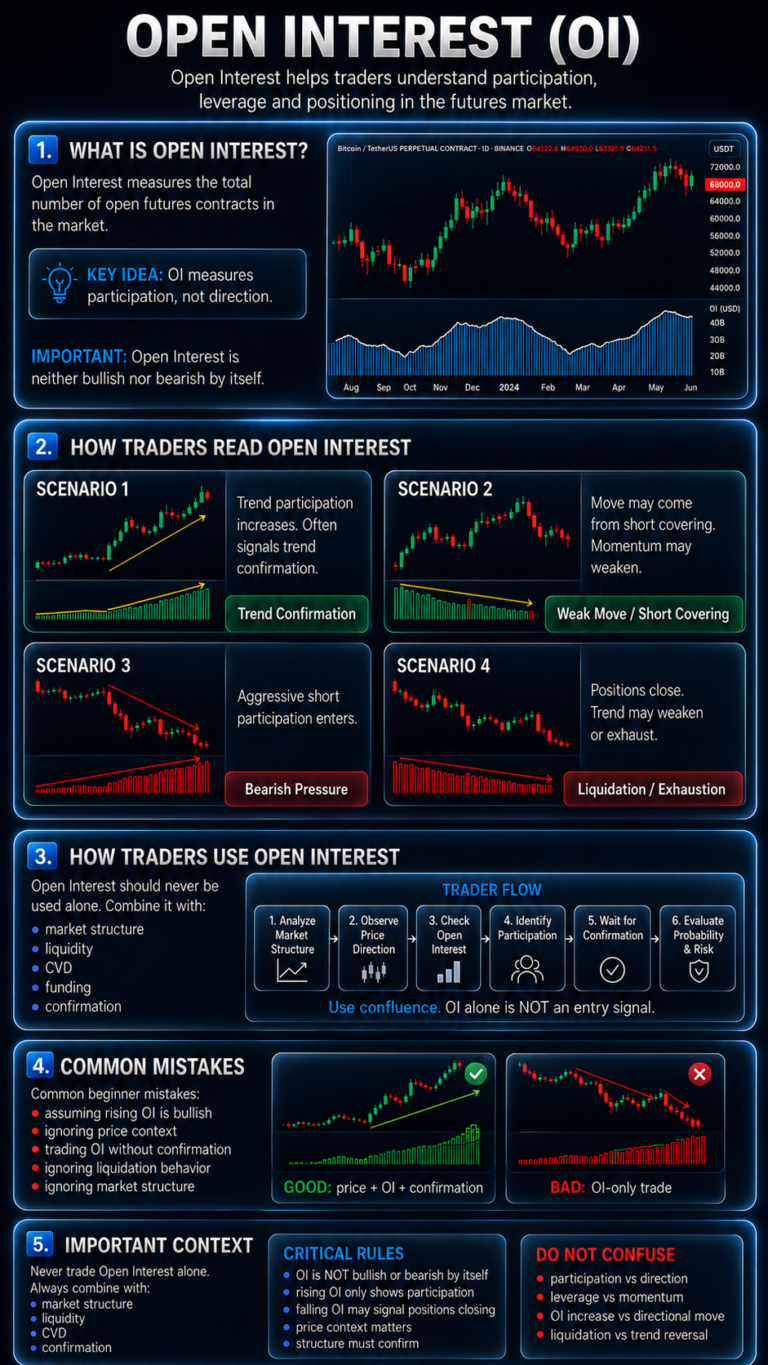
- Volume fades or becomes euphoric
- HTF supply or order block reacts
These signals suggest exhaustion, not automatic reversal.
How Market Bottoms Form
A bottom can appear when selling pressure fades after aggressive downside movement.
- Price sweeps major lows and reclaims
- Selling pressure starts weakening
- Bullish divergence appears
- Demand or support begins to hold
- Structure starts shifting upward
Bottoms form through controlled recovery, not panic entries.
How To Confirm A Real Shift
- Start with higher timeframe context
- Wait for liquidity to be taken
- Look for momentum weakness or divergence
- Confirm with CHoCH or BOS
- Enter only after structure agrees
No structural shift means no confirmed reversal.
Quick Recap
- Tops form when greed meets exhaustion
- Bottoms form when fear meets absorption
- Divergence can warn of a shift
- Structure must confirm the reversal
- Tops and bottoms are confirmed by structure, not emotion.
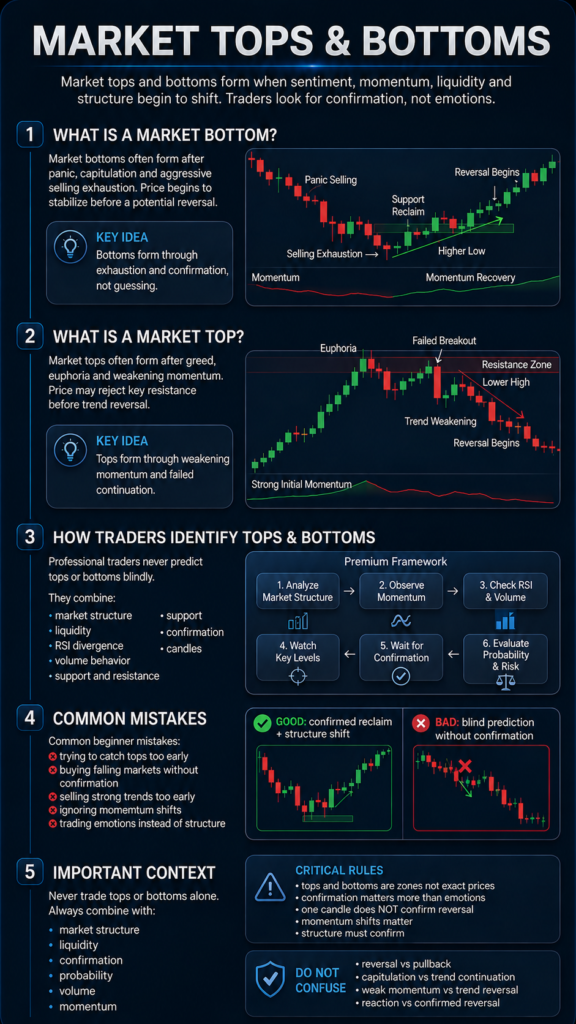
Top Formation:
Euphoria + weak momentum + divergence
= possible market top
Bottom Formation:
Fear + exhaustion + accumulation
= possible market bottom
How to read it:
Market Top Framework
- Price pushes into resistance or HTF supply
- Momentum starts weakening
- Liquidity sweep fails to continue
Market Bottom Framework
- Panic selling (Capitulation) reaches key support
- Selling pressure starts fading
- Structure begins reclaiming important levels
Advanced context:
Capitulation = final wave of emotional selling where panic reaches extremes.
Smart Money often accumulates when weak hands exit positions.
Beginner Pro-Tips:
- The Crowd Sentiment Filter: when everyone talks about massive gains, greed may be peaking. When panic dominates and crypto feels “dead”, fear may be extreme
- The Liquidity Sweep Trap: failed breakouts above major highs often become liquidity sweeps instead of continuation
- The Safe Bottom Entry: many traders wait for reclaim and structure shift instead of trying to catch the exact bottom
Golden Rule:
Tops and bottoms are processes, not single price points. Wait for structure confirmation before assuming a reversal.