Divergence
Learn how divergence reveals weakening momentum before potential market shifts.

Divergence
- Never trade divergence alone
- Always confirm with structure
- Wait for BOS confirmation
- Combine with liquidity and OB
- Treat divergence as context, not signal
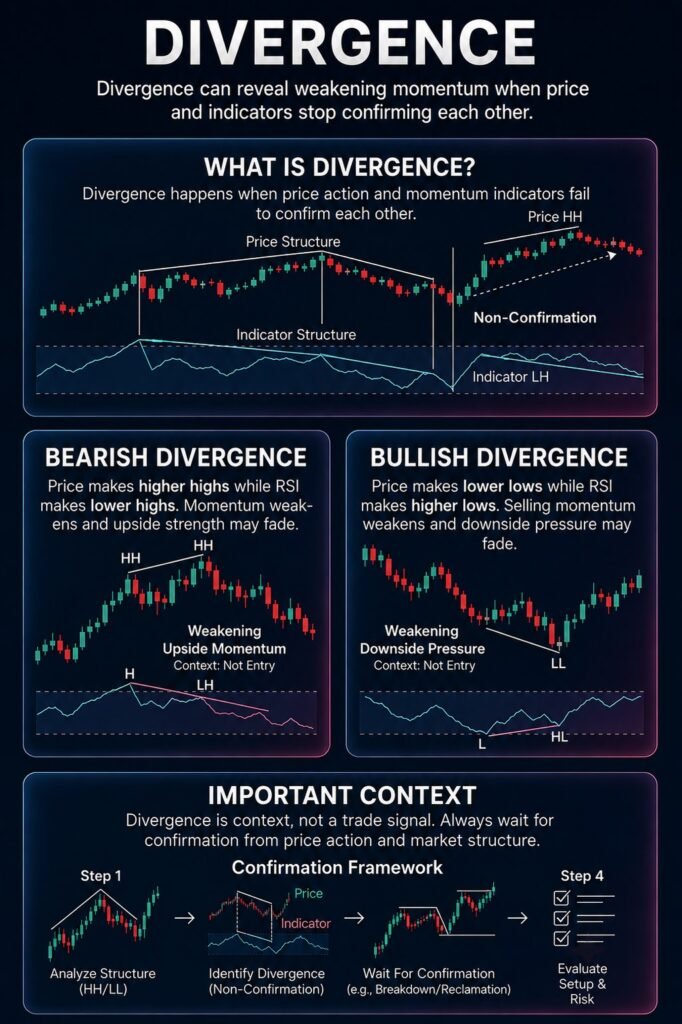
Divergence appears when price and momentum stop agreeing. It often signals weakening trend strength before a larger move develops.
Divergence is not an entry signal on its own. Strong traders use it as confirmation together with structure, liquidity and price action.
What Is Divergence
Divergence happens when price creates one pattern while momentum indicators show another.
This disagreement often warns that momentum is fading and a shift may be coming.
Bullish Divergence
Bullish divergence appears when price makes a lower low but momentum makes a higher low.
- Price creates a lower low
- RSI or momentum creates a higher low
- Selling pressure begins weakening
- Liquidity may have been swept below lows
Strong traders wait for BOS to the upside before assuming a reversal.
Bearish Divergence
Bearish divergence appears when price makes a higher high but momentum creates a lower high.
- Price creates a higher high
- RSI or momentum creates a lower high
- Buying pressure weakens
- Liquidity may have been swept above highs
Bearish divergence often appears near resistance or after euphoric moves.
How To Use Divergence
- Always combine divergence with structure
- Wait for BOS or confirmation candle
- Use supply and demand zones for context
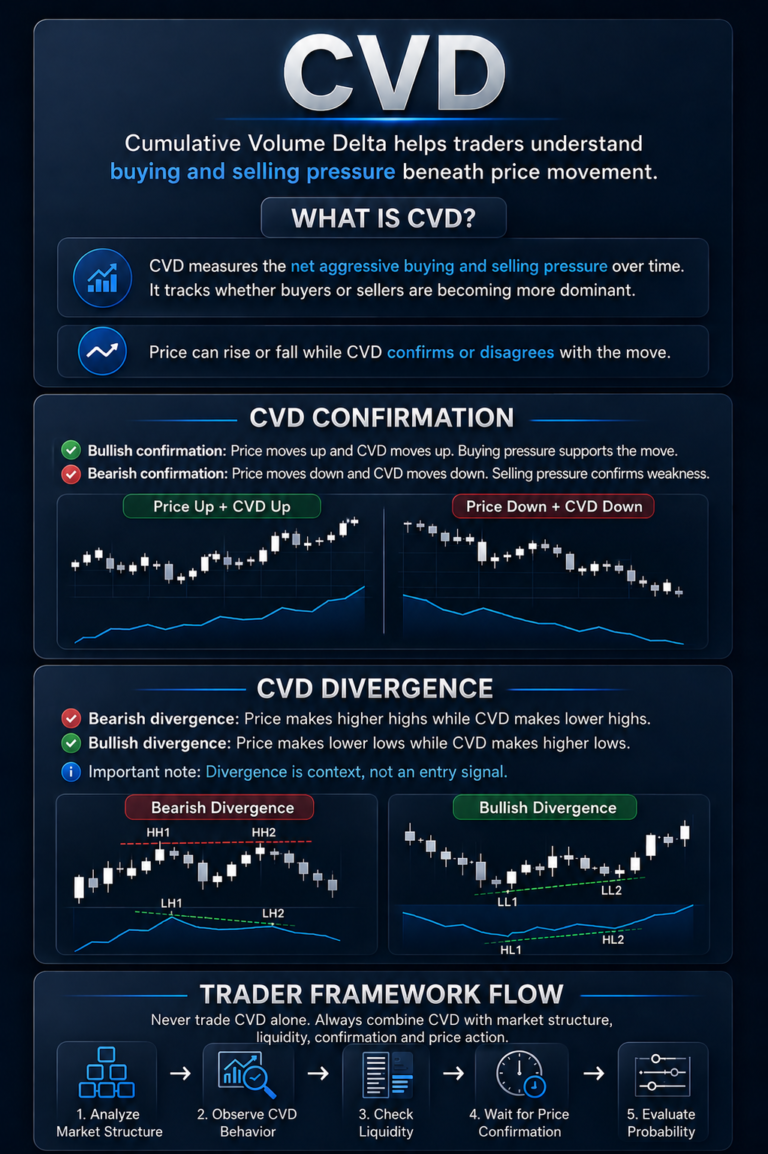
- Never enter trades from divergence alone
Divergence is context. Structure confirms direction.
Quick Recap
- Bullish divergence = price LL and RSI HL
- Bearish divergence = price HH and RSI LH
- Divergence warns about momentum shifts
- BOS confirms the move
- Never trade divergence without confirmation
- Divergence reveals weakness. Structure confirms the move.