Learn how emotions, discipline and mindset shape every trading decision.

Trading Psychology
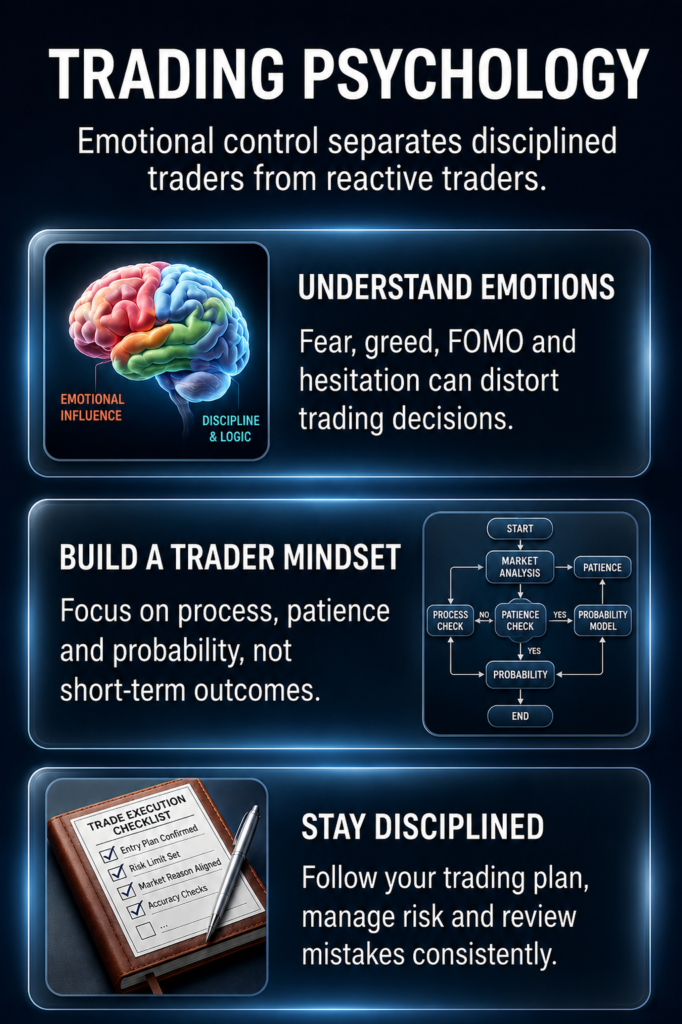
- Use predefined decisions
- Record decisions and outcomes
- Review emotional triggers without assuming causation
- Test strategy expectancy independently
Trading psychology can influence decisions, but results also depend on strategy quality, execution costs, market conditions and risk. A disciplined process cannot make a strategy with negative expected value profitable.
FOMO Is Your Enemy
FOMO appears when traders chase price instead of following a structured plan. This often leads to emotional entries and unstable execution.
Avoid FOMO by:
- entering only at predefined levels
- waiting for confirmation
- avoiding emotional urgency
Urgency usually leads to emotional trading.
Journaling Builds Better Decisions
A journal can help identify repeated decisions and emotional patterns. Its usefulness depends on consistent records and review.
Your journal should include:
- entry and exit reasons
- emotions during execution
- mistakes made
- what to improve next time
Reviewing trades builds clarity and confidence.
Discipline Comes From Practice
Discipline improves through repetition. Simulated trading helps separate emotions from execution.
Consistency comes from following the same process repeatedly.
Trading Psychology: Quick Recap
- follow your plan
- avoid emotional urgency
- journal every trade
- build discipline through repetition
Evidence and Practical Limitations
These concepts are educational frameworks, not verified predictions or guarantees of profit. Test precise rules on independent data and include fees, spreads, slippage, leverage and the possibility of losses beyond a planned stop. Record both successful and unsuccessful outcomes to avoid hindsight bias.
End of lesson 1
Remember
- Psychology influences execution, but profitability also requires a sound strategy and realistic costs.