Fear & Greed
Learn how fear and greed shape market behavior and influence trading decisions.

Fear & Greed
- Follow structure over emotion
- Buy fear, avoid panic
- Avoid chasing euphoric moves
- Always trade with a plan
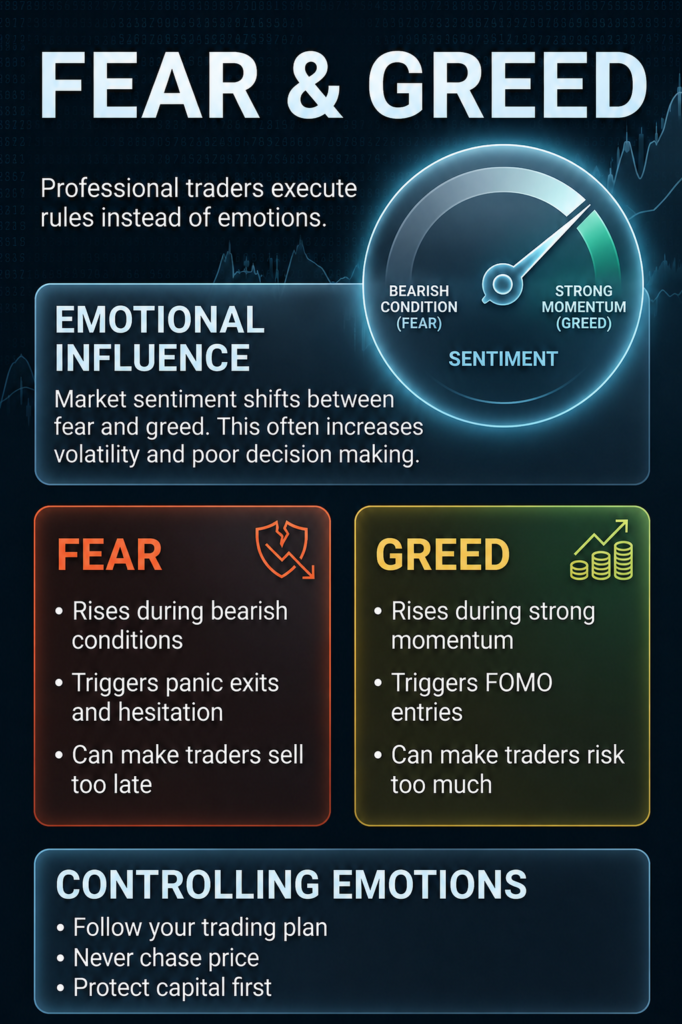
Fear and greed shape liquidity, volatility and market behavior. Emotional extremes often influence decisions long before clear chart patterns appear.
What Fear and Greed Mean
Fear often leads to hesitation, panic selling and early exits.
Greed often creates overconfidence, chasing behavior and poor timing.
Both emotions can pull traders away from structure and disciplined execution.
Markets often behave irrationally when traders react emotionally.
How To Read Fear
Fear usually appears during uncertainty and aggressive downside moves.
- Sharp drops that sweep liquidity
- Long lower wicks after panic selling
- High volatility with weak continuation
- Negative sentiment and bearish headlines
Strong traders stay patient and only buy fear when structure supports the idea.
How To Read Greed
Greed often appears near euphoric highs and emotional buying.
- Large impulsive candles with no pullbacks
- Breakouts near major highs
- Social media hype and unrealistic expectations
- Late entries driven by FOMO
Smart traders reduce risk when sentiment becomes euphoric and avoid chasing extended price moves.
How To Use This
- Check market sentiment before entering
- If a setup feels too obvious, emotion may be involved
- If fear feels extreme, look for structure
- Always trade based on a plan, not emotion
Price follows liquidity. Liquidity often follows emotion.
Quick Recap
- Fear creates opportunity
- Greed creates traps
- Read the crowd instead of following it
- Execute based on structure, not feelings
- Discipline beats emotion. Structure beats sentiment.