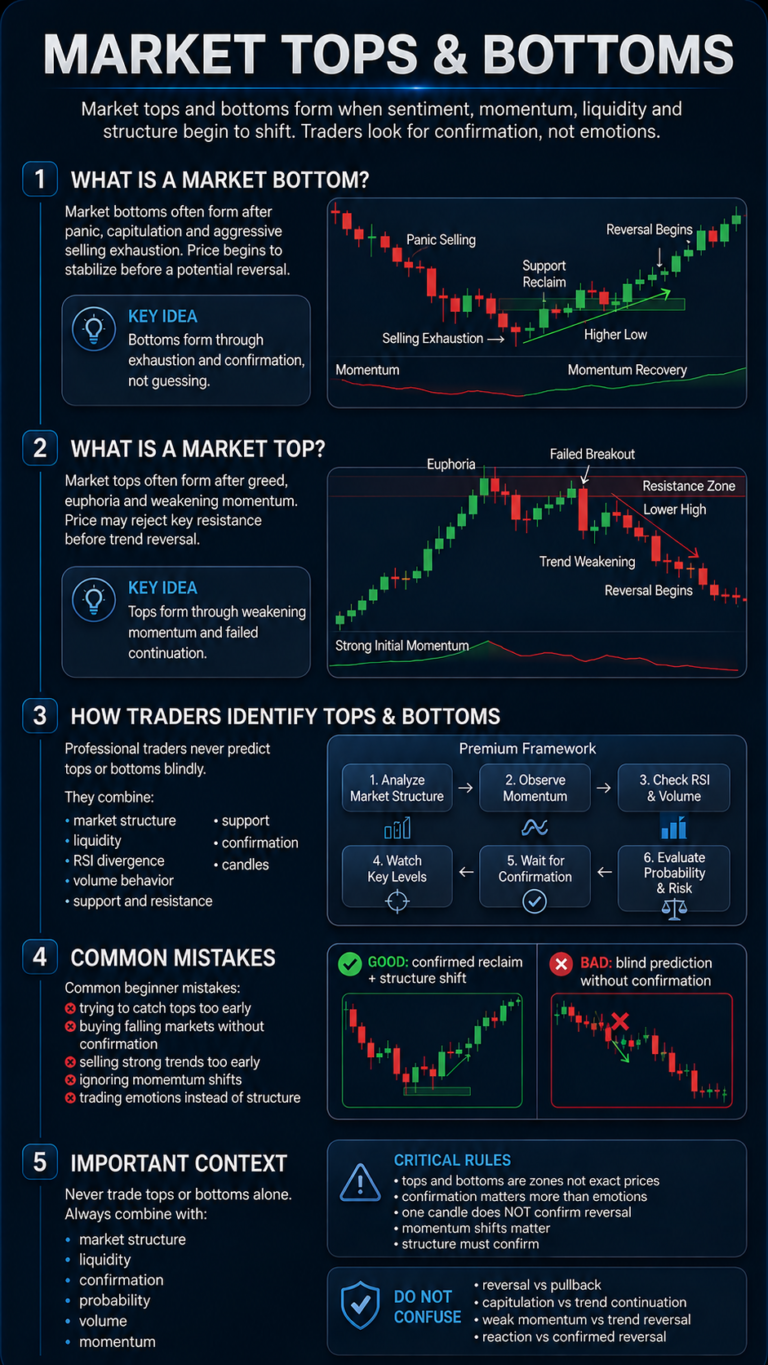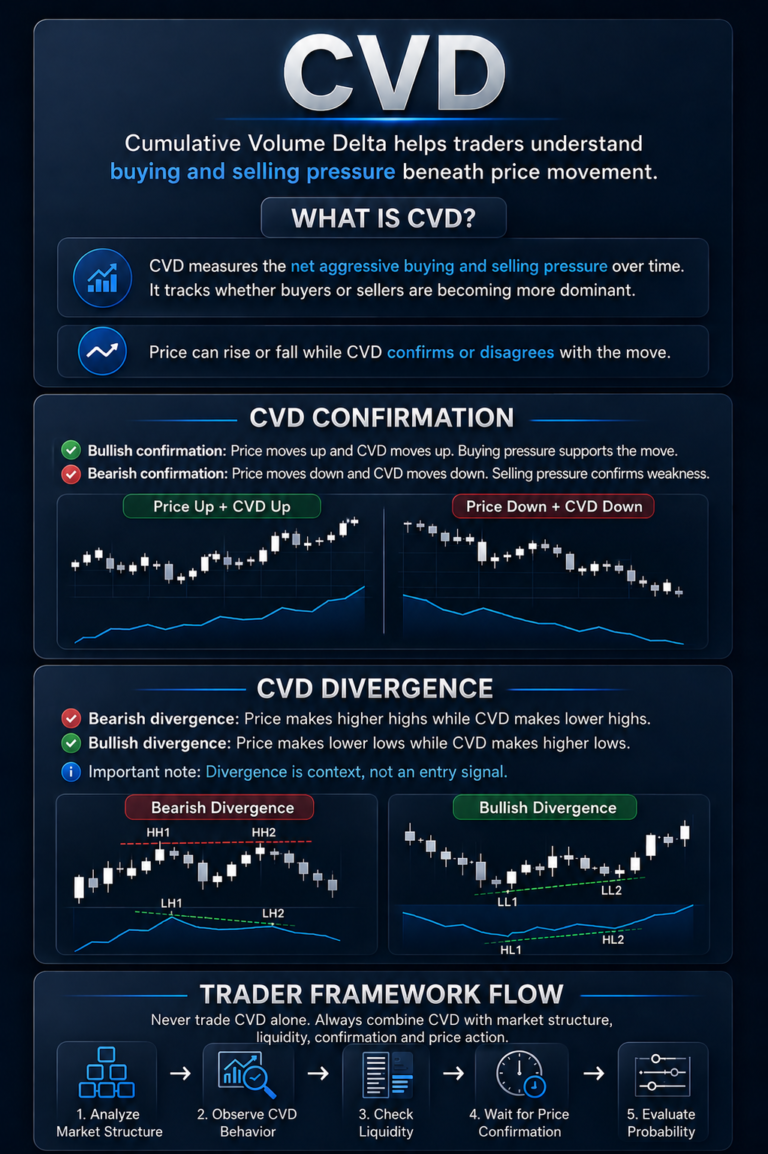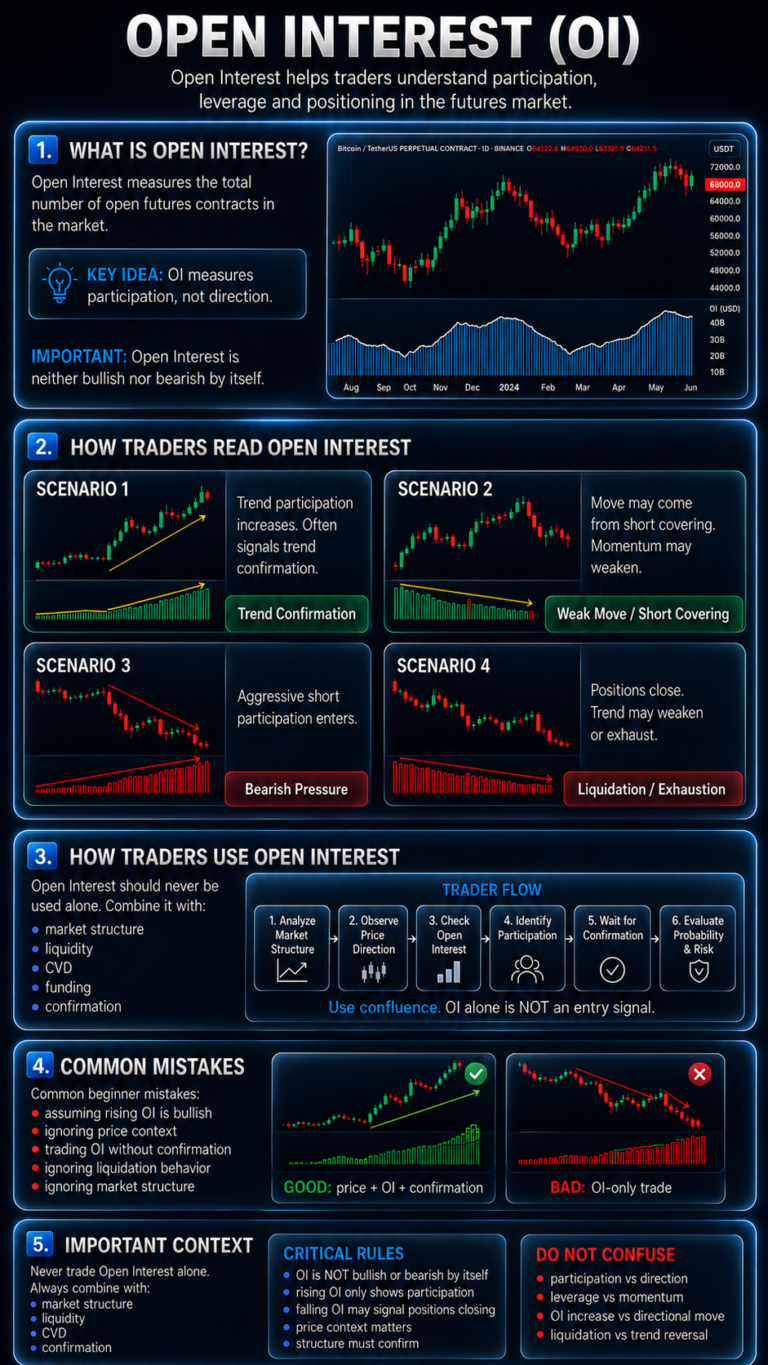
Relief Rallies
Learn how relief rallies trap traders inside bearish market conditions.

Relief Rallies
- Respect the higher timeframe trend
- Do not buy every bounce
- Watch volume and momentum weakness
- Wait for structure confirmation
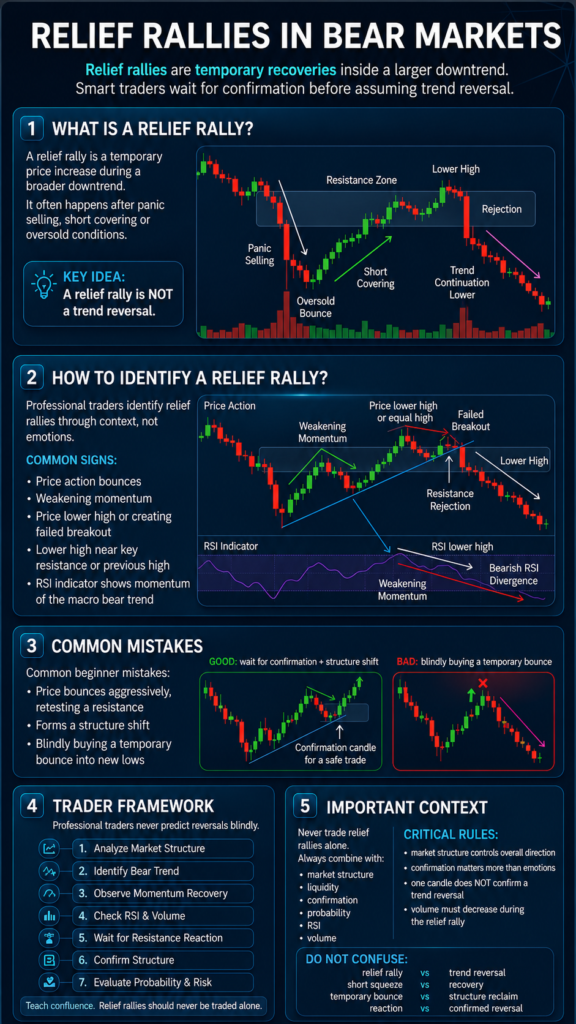
A relief rally is a temporary recovery inside a larger downtrend. It can look bullish, but it often appears before the market continues lower.
What A Relief Rally Means
Relief rallies usually happen after aggressive selling. Price bounces as panic slows down, short positions close and late buyers step in too early.
The move can feel strong in the moment, but the larger market structure often stays bearish.
Strong traders do not assume reversal from one bounce. They wait for structure to confirm the shift.
How Relief Rallies Form
A relief rally often starts after price becomes oversold or reaches a key reaction area.
- Price bounces after a strong sell-off
- The rally moves into resistance, supply or an order block
- Momentum starts weakening during the recovery
- The market forms a lower high instead of a true reversal
The key question is simple: did the trend actually change, or did price only bounce?
Trap Signals
Relief rallies often trap traders who enter too late during a temporary recovery.
- Weak or declining volume during the bounce
- RSI divergence near resistance
- CVD divergence while price pushes higher
- Rejection from higher timeframe supply
- No BOS to the upside
When momentum weakens near resistance, the rally may be close to failure.
How To Trade Relief Rallies
- Identify bearish market structure first
- Wait for price to rally into supply, resistance or an order block
- Look for rejection, divergence or weak volume
- Wait for CHoCH or BOS back to the downside
- Use the retest for a cleaner entry
Targets often sit near previous lows, liquidity pools or bearish imbalance zones.
Common Mistakes
- Buying the bounce without structural confirmation
- Shorting too early before rejection appears
- Ignoring weak volume during the rally
- Treating every bounce as a full trend reversal
Quick Recap
- Relief rallies are temporary recoveries inside downtrends
- Short covering can fuel the move without real demand
- Weak volume and divergence are warning signs
- Structure must confirm before reversal is trusted
- A relief rally feels bullish, but structure decides if the trend has changed.
Relief Rally Logic:
Strong sell-off + temporary recovery
≠ trend reversal
Bearish structure + weak reclaim + resistance rejection
= possible relief rally
How to read it:
Relief Rally Framework
- Price bounces after an aggressive sell-off
- Recovery slows near resistance or HTF supply
- Market structure remains bearish
Advanced context:
Short Covering can temporarily fuel upside without real demand.
A strong bounce alone does not confirm reversal.
Dead Cat Bounce = failed reclaim near resistance before continuation lower.
Beginner Pro-Tips:
- The Volume Lie Detector: strong sell-offs often happen on heavy volume. If the bounce happens on weak volume or low RVOL, conviction may be weak
- The Fibonacci Danger Zone: many relief rallies slow down between the 0.382 and 0.618 retracement levels during bearish conditions
- The Short Covering Trap: fast upside movement can happen from short positions closing, not real buying pressure
Golden Rule:
A relief rally is not a confirmed reversal. Market structure stays bearish until price reclaims higher timeframe structure and starts forming higher highs.