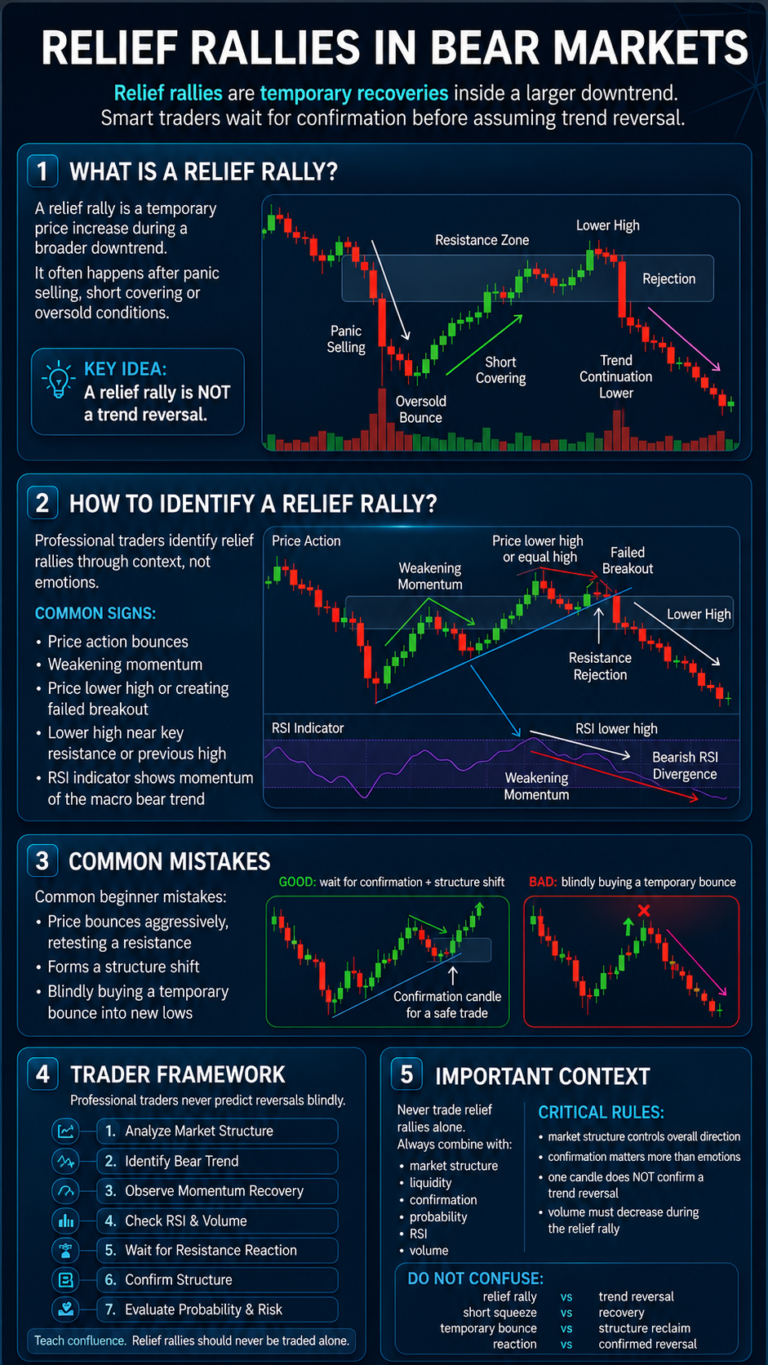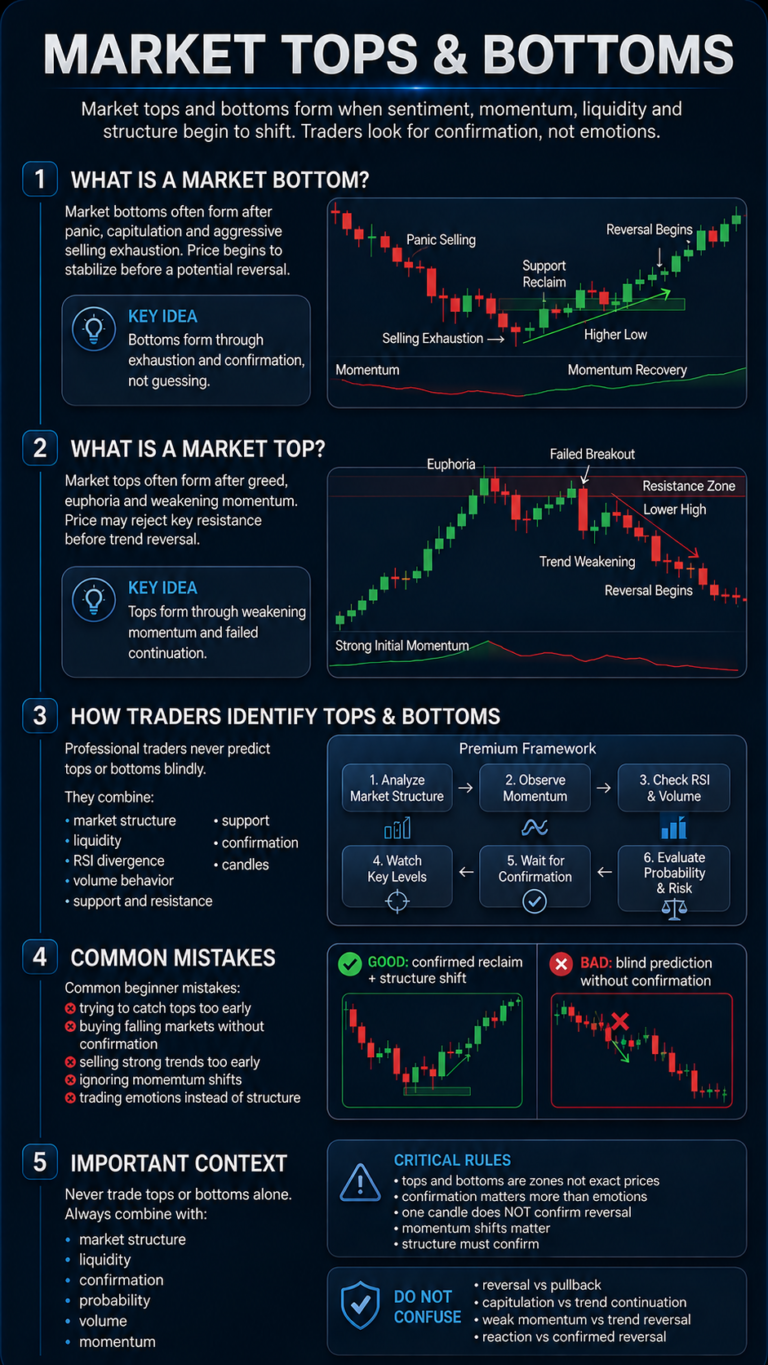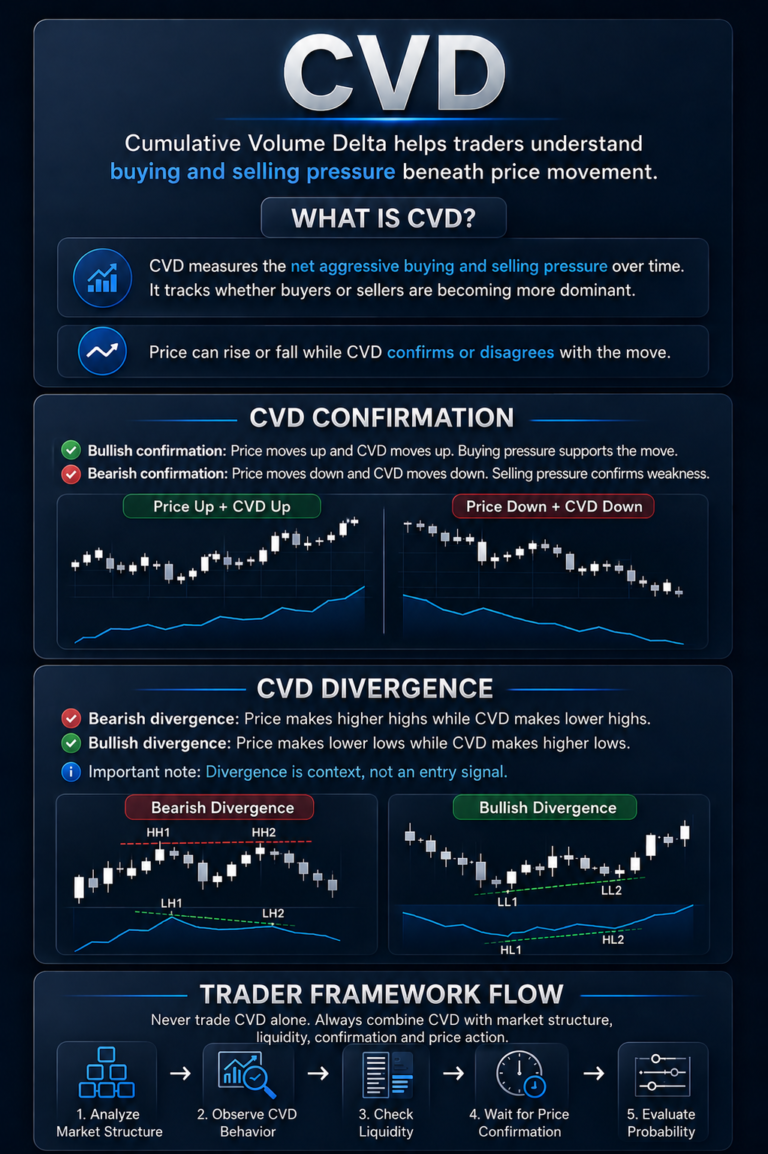
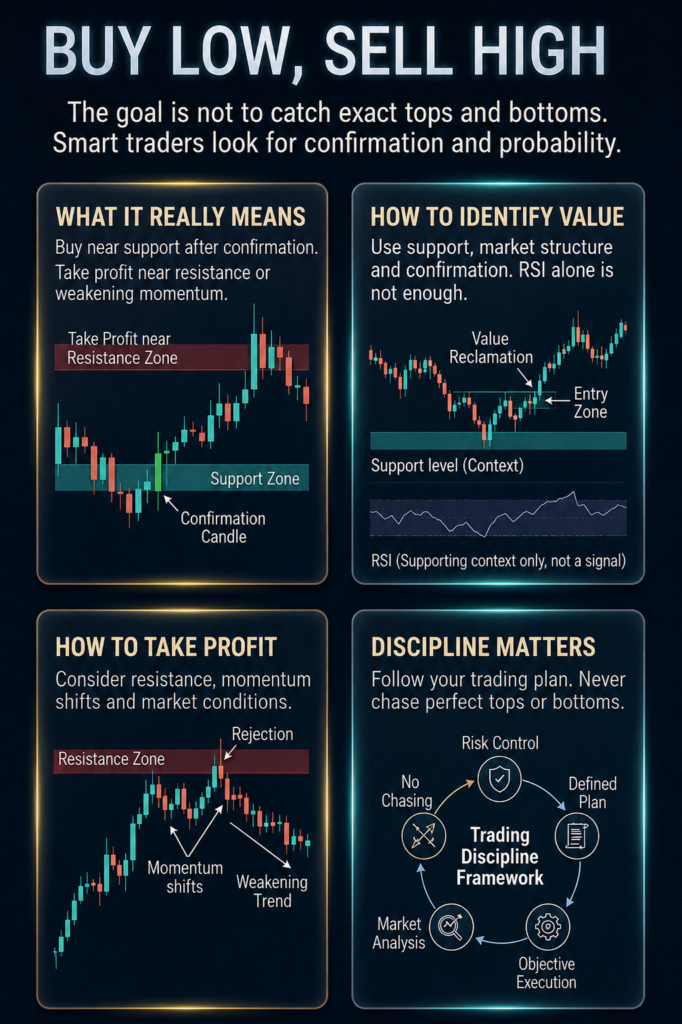
Buy Low Sell High
Learn how to buy discounts, avoid emotional entries and sell into strength.

Buy Low Sell High
- Buy fear, not hype
- Sell strength, not weakness
- Avoid chasing price
- Follow structure and confirmation
The concept sounds simple. Most traders still fail at it because emotions reverse logic. Traders often buy when price feels safe and sell when fear appears.
Strong traders learn to reverse emotional instincts and execute based on structure.
What Buy Low Really Means
Buying low does not mean blindly buying dips. Smart traders wait for context and confirmation.
- Demand zones holding
- Liquidity sweeps below lows
- Fear-driven selling
- Discount areas with structure
Buying during panic often creates better opportunity than buying after euphoric breakouts.
What Sell High Really Means
Selling high means reducing exposure when price becomes overextended and emotional buying increases.
- Liquidity pools above highs
- Resistance or supply zones
- Momentum exhaustion
- Euphoric market sentiment
Strong traders exit into strength instead of waiting for weakness.
The Danger Of Chasing
Chasing happens when traders enter after the move already expanded.
- Poor risk reward
- Higher emotional pressure
- Late entries
- Weak invalidation logic
If the move already happened, patience is often the better trade.
How To Use This
- Buy near value, not after expansion
- Sell into strength, not panic
- Use confirmation before entering
- Follow structure instead of emotion
Patience turns a simple concept into consistent execution.
Quick Recap
- Buy discounts and sell premiums
- Fear often creates opportunity
- Avoid chasing emotional moves
- Strong traders follow confirmation
- Patience protects execution
- Buy value. Sell emotion. Patience beats urgency.
Risk Reward Formula:
Risk : Reward = R:R Ratio
Example Trade:
$100 risk / $300 target
= 1:3 R:R
How to read it:
- 1:1 = equal risk and reward
- 1:2 = solid setup
- 1:3 = strong setup
- Below 1:1 = weaker risk profile
Why it matters:
Better risk reward helps traders stay profitable even with average win rates.
Example:
If you risk $100 and target $300:
Losing trade = −$100
Winning trade = +$300
You need fewer winning trades to stay profitable over time.
The Win Rate Illusion:
With a 1:3 R:R, break-even win rate is only around 25%.
This means traders can lose multiple trades and still remain profitable when winners are larger than losers.
The Fake R:R Trap:
Never force a bigger target just to create a better ratio.
Take profit should always sit at logical technical levels such as liquidity, resistance, supply or structure.
If market structure only offers weak R:R, skipping the trade is often the better decision.
The Psychology Trap:
Many beginners close winning trades too early and hold losing trades too long.
Strong traders trust their execution plan and let predefined targets and stop losses do the work.
The Partial Profit Rule:
Some traders reduce stress by taking partial profit at 1:1 or 1:2 and moving stop loss to Break-Even.
This protects capital while keeping upside potential open.
Golden Rule:
Market structure determines your stop loss and take profit, not emotion. If the setup does not offer clean R:R, skip it.
Key idea:
Strong trades protect downside and maximize upside.