Bull & Bear Markets
Learn how bullish and bearish market cycles shape structure, momentum and execution.

Bull & Bear Markets
- Trade with market direction
- Buy pullbacks in bull markets
- Short rallies in bear markets
- Never fight structure
Market direction shapes how traders should think, execute and manage risk. Bullish markets reward continuation. Bearish markets reward patience and clean pullbacks.
Strong traders trade with the dominant trend instead of fighting market structure.
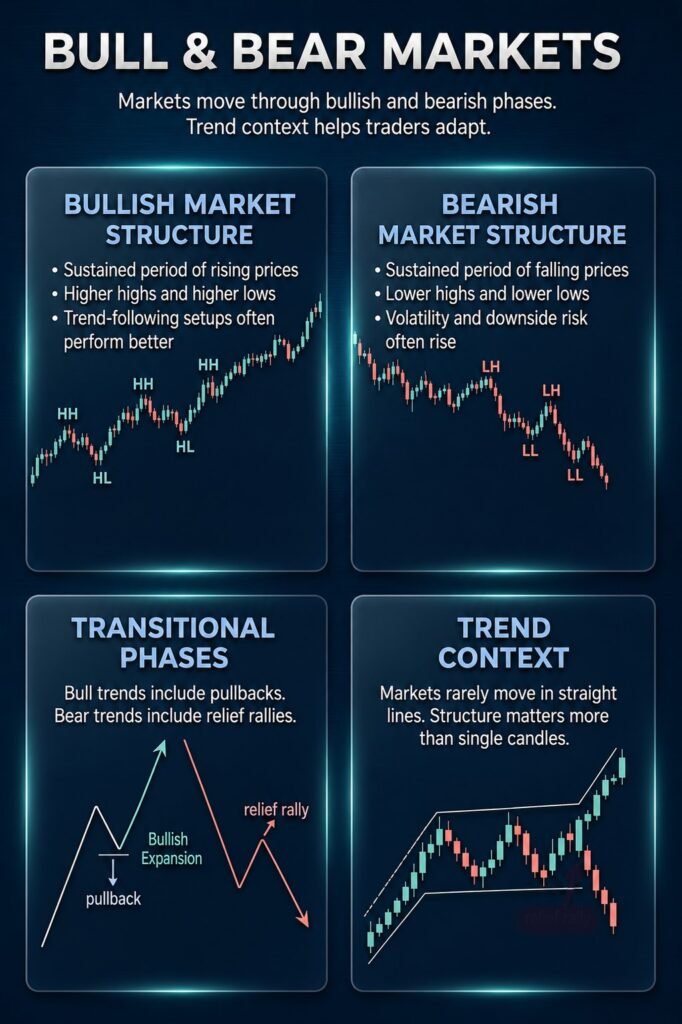
Bull Market Structure
A bull market forms when buyers control momentum and price continues higher.
- Higher highs form
- Higher lows hold
- Demand zones react more often
- Breakouts continue more cleanly
Liquidity often forms above highs before continuation happens.
In strong bull markets, traders usually look for pullbacks instead of chasing price.
Bear Market Structure
A bear market forms when sellers control momentum and price trends lower.
- Lower highs form
- Lower lows continue
- Supply zones reject price
- Breakouts fail more often
Liquidity often forms above lower highs before price sweeps and continues lower.
In strong bear markets, traders usually short rallies instead of buying weakness.
Transitional Phases
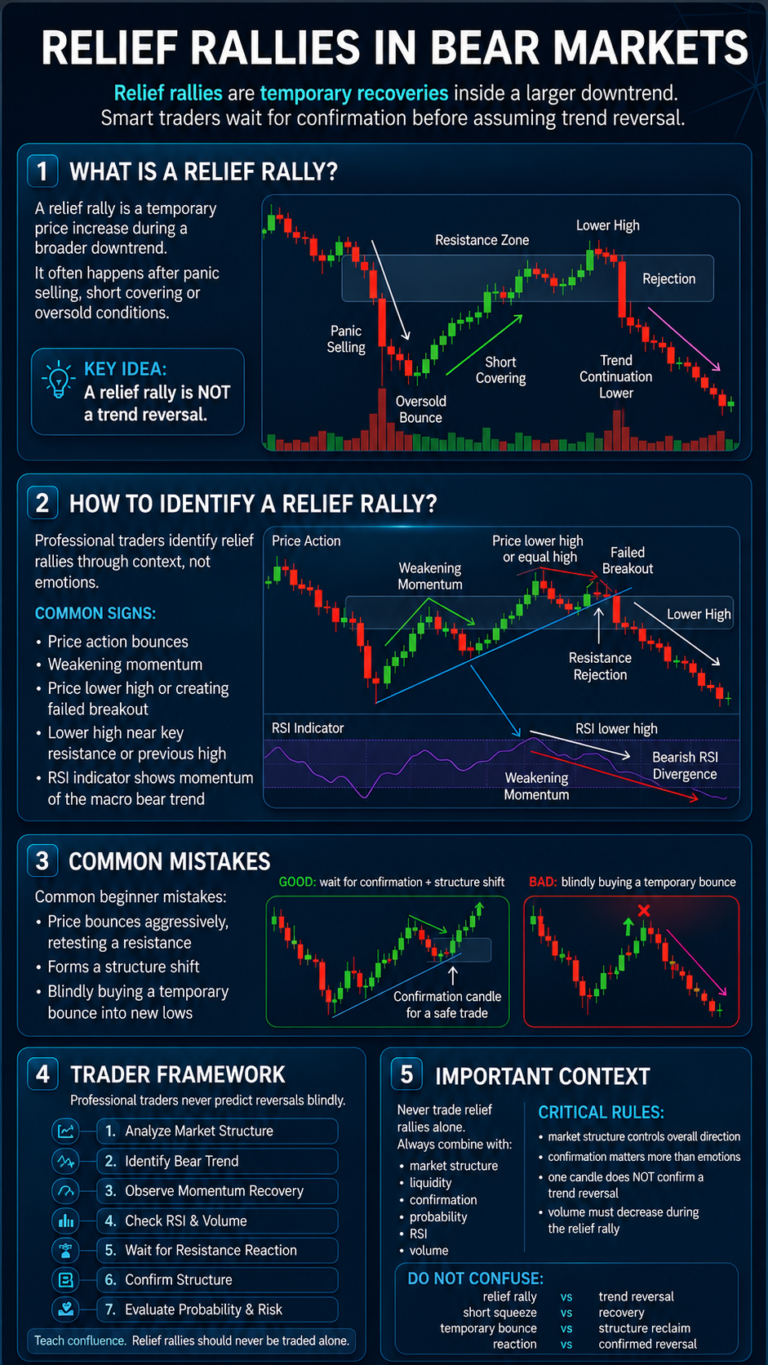
Markets rarely move in straight lines. Bull markets include pullbacks. Bear markets include relief rallies.
- Pullbacks often create opportunity in bull trends
- Relief rallies often create traps in bear trends
- Structure matters more than emotions
- Context matters more than single candles
How To Use This
- Trade with the dominant market direction
- Buy pullbacks during bullish conditions
- Short rallies during bearish conditions
- Adapt expectations to market structure
Trading with structure creates consistency. Trading against structure creates friction.
Quick Recap
- Bull markets create higher highs and higher lows
- Bear markets create lower highs and lower lows
- Liquidity supports continuation
- Pullbacks and relief rallies are normal
- Trade with direction, not bias
- Trade with market direction. Do not fight structure.