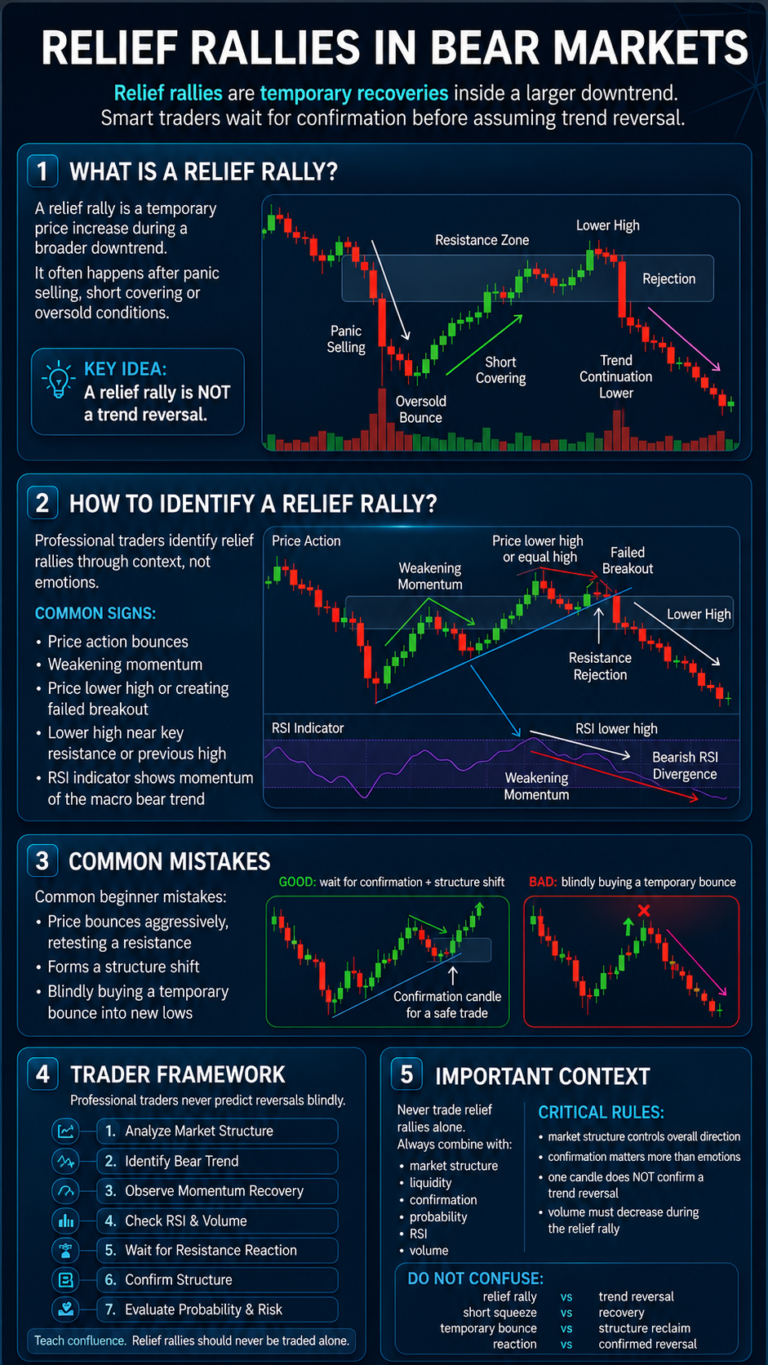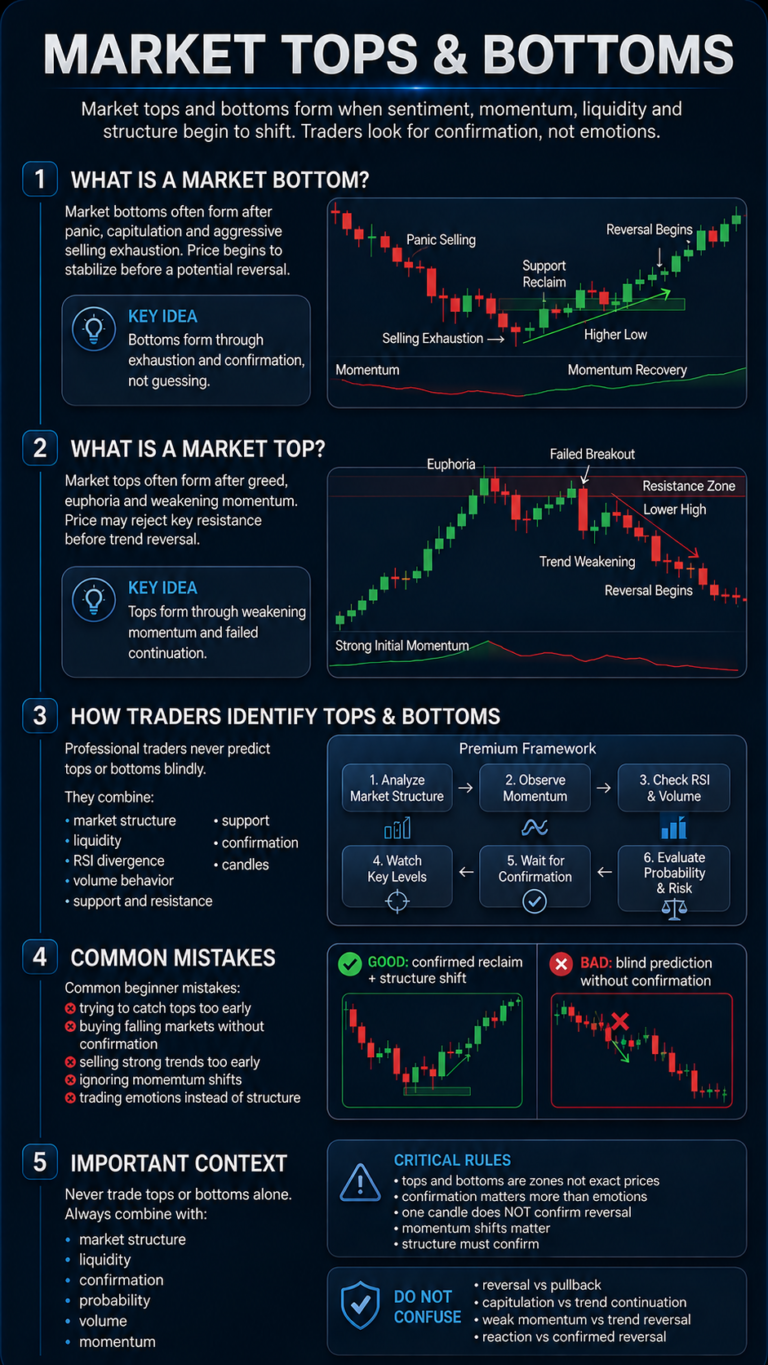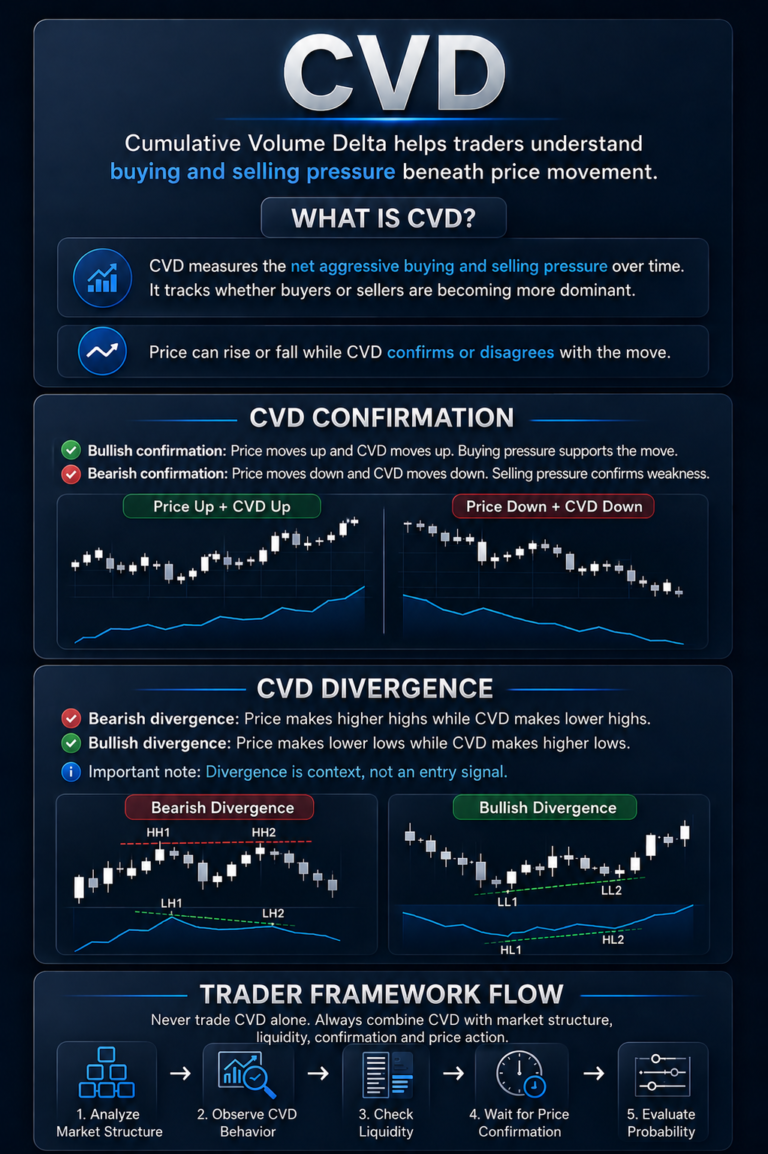
Risk Management
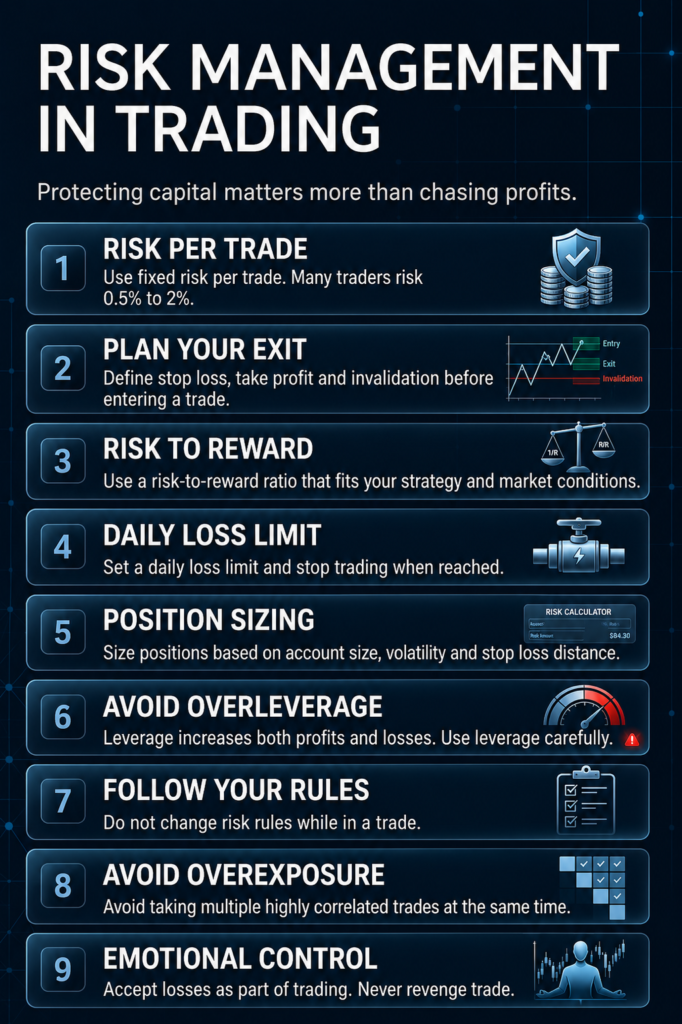
Learn how professional traders protect capital, control losses and survive long enough for consistency to emerge.

Risk Management
- Risk only 1–2 percent per trade
- Place stop loss at invalidation
- Never move stop loss emotionally
- Target at least 1:2 risk-to-reward
- Size comes from math, not emotion
Risk management protects your capital before profits. A strategy can fail for a moment and psychology can slip. Controlled risk keeps you in the game.
Risk Per Trade
Risk 1–2 percent per trade. Anything higher can turn a normal loss into a heavy mental hit.
Low risk supports long-term survival.
Target R:R
Aim for a minimum of 1:2 R:R. This keeps winners larger than losers, even with a modest win rate.
High R:R protects you during losing streaks.
Stop-Loss Rule
Place your stop loss where the setup fails. Base it on structure, not emotion.
Bad example: It feels too far. I will move it closer.
Good example: Below liquidity sweep and BOS level.
Your SL marks where the idea ends, not where fear begins.
Position Size
Size must follow risk rules, not confidence. Feeling confident does not mean size up.
Follow your formula every time.
Common Mistakes
- Increasing size after wins
- Moving SL further to stay in the trade
- Trading without defined invalidation
- Risking more on strong-looking setups
- Letting emotions overrule numbers
Quick Recap
- Risk 1–2 percent per trade
- Minimum R:R is 1:2
- SL means technical invalidation
- Size comes from math, not emotion
- Protecting capital builds consistency
- Protect capital first. Consistency is not possible without risk control.
Position Size Formula:
Account Risk ÷ Stop Loss Distance
= Position Size
Example:
$10,000 account × 1% risk = $100 maximum loss
If stop loss distance equals $50:
$100 ÷ $50 = 2 units
What happens if stop loss gets hit?
2 units × $50
= $100 total loss
Total risk stays fixed at exactly 1% of account capital.
Important note:
Leverage does not change risk.
Leverage only changes the margin required to open the position.
Your maximum planned loss stays the same if position size stays fixed.
Beginner Pro-Tips:
- The Sleep-Well Rule: risking 1% to 2% per trade protects long-term survival during losing streaks
- The Leverage Illusion: higher leverage does not automatically mean higher risk. Position size determines risk, not leverage
- The Liquidation Trap: with extreme leverage, liquidation price can sometimes sit closer than technical stop loss. Always check liquidation distance
- The Volatility Adjuster: wider stop loss distance means smaller position size to keep dollar risk consistent
Golden Rule:
Find technical invalidation first, then let the formula decide position size. Never force position size onto market structure.